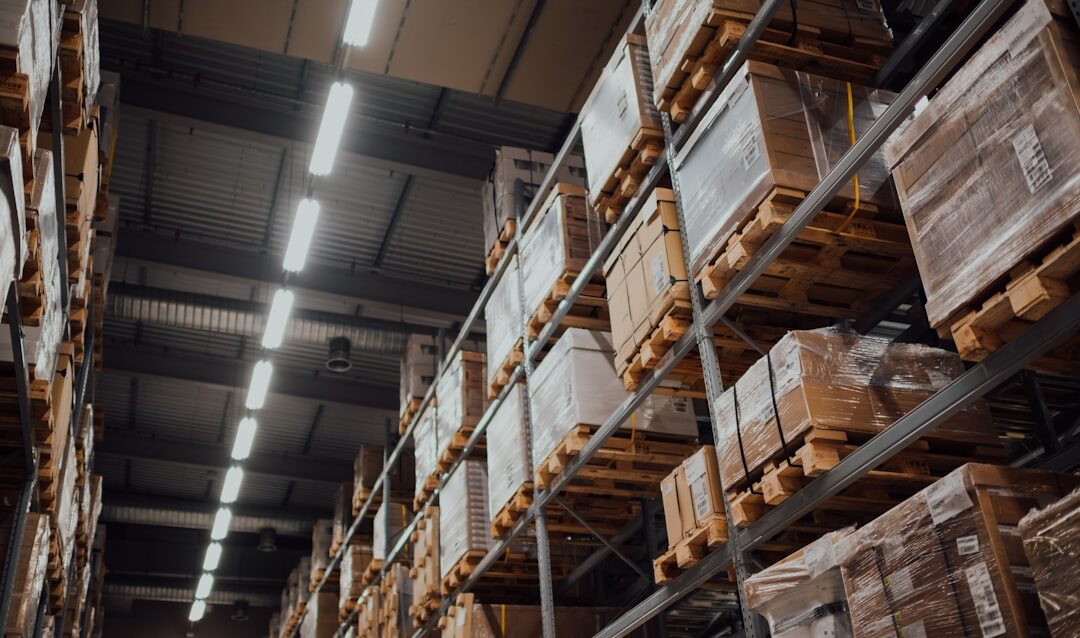
The AI In Supply Chain Market: Beyond Pilot Programs
The AI In Supply Chain Market is not merely growing; it’s undergoing a fundamental transformation. Businesses are moving past experimental pilot programs and deploying AI systems directly into core logistics and manufacturing operations. The U.S. manufacturing sector reported AI utilization in 78% of firms in 2024, with 53% planning to expand AI investments by 2026, according to the NIST (National Institute of Standards and Technology) 2025 report. This data confirms that AI is becoming a standard operational component, not just a future aspiration.
At The AI Division, we see companies adopting AI to solve immediate, quantifiable problems: optimizing inventory, predicting demand fluctuations, and streamlining warehousing. The impact extends across the entire value chain, from raw material procurement to last-mile delivery. We believe that ignoring this shift means conceding efficiency and resilience to competitors.
Current AI Applications: Driving Efficiency and Predicting Demand
AI’s value in the supply chain emerges from its ability to process vast datasets and identify patterns humans miss. Demand forecasting, for example, moves from statistical models to AI algorithms that incorporate real-time sales data, social media trends, and even weather patterns. This allows companies to anticipate consumer needs with greater accuracy, reducing overstocking and stockouts. Consider the operational gains from a retail brand that uses AI to predict seasonal spikes for specific products, ensuring shelves stay stocked without excess inventory sitting in warehouses.
Inventory optimization is another critical area. AI systems monitor stock levels across multiple locations, identifying optimal reorder points and quantities. This minimizes carrying costs and prevents costly disruptions. In manufacturing, AI algorithms analyze machine sensor data to predict equipment failures before they happen, enabling predictive maintenance schedules that reduce downtime and improve Overall Equipment Effectiveness (OEE). OEE measures manufacturing productivity, combining availability, performance, and quality into one metric.
From Predictive Analytics to Autonomous Operations
The next phase in the AI in supply chain market involves moving beyond predictive insights to autonomous decision-making. This means AI systems that not only tell you what might happen but also take action. AI agents, for instance, can manage complex sequences of tasks without continuous human intervention. An agent might monitor a shipment, identify a potential delay, automatically re-route it, and notify all affected parties. This reduces manual oversight and accelerates response times to disruptions.
Integrating these intelligent systems requires careful planning and execution. It’s about connecting disparate enterprise resource planning (ERP) systems, warehouse management systems (WMS), and transportation management systems (TMS) to a centralized AI orchestrator. This allows for end-to-end process automation. If you are ready to implement these kinds of solutions, working with an experienced AI agency like The AI Division for AI-Powered Process Automation helps ensure these systems are designed for your specific workflows and integrated seamlessly into your existing infrastructure.
Enhancing Supply Chain Resilience with Digital Twins
Supply chain resilience remains a top concern for businesses globally. AI addresses this by building more adaptable and robust systems. Digital Twins provide one such mechanism. A digital twin is a virtual model designed to reflect a physical object, process, or system. In the supply chain, a digital twin can simulate the entire network, testing the impact of potential disruptions like port closures or material shortages. This allows companies to scenario-plan and develop contingency strategies before real-world events occur.
For example, an automotive manufacturer might use a digital twin of its global parts supply network. If a key component supplier experiences a production halt, the digital twin can immediately calculate the impact on various assembly lines, identify alternative suppliers, and recommend new logistics routes. This proactive approach significantly reduces the time and cost associated with managing unforeseen events.
Navigating Implementation Challenges
Implementing AI in supply chain operations comes with its own set of hurdles. Data quality is often the first bottleneck; AI systems are only as good as the data they consume. Inconsistent, incomplete, or siloed data prevents accurate predictions and effective automation. Companies must invest in data governance strategies to clean, standardize, and integrate their diverse datasets.
Another challenge is integrating new AI tools with legacy IT infrastructure. Many supply chain systems are decades old, making seamless integration difficult. This often requires custom API development or middleware solutions. Finding talent with both AI expertise and deep supply chain domain knowledge also presents a challenge. Organizations need to either upskill existing teams or partner with specialized AI agencies to bridge this gap.
The AI Division’s Outlook: 2026 and Beyond
Our perspective on the AI in supply chain market for 2026 indicates a move toward hyper-personalized and localized supply chains. AI will enable micro-fulfillment centers and on-demand manufacturing, bringing production closer to the consumer. This reduces transportation costs and carbon footprints. Expect AI-driven dynamic pricing, automated contract negotiation with suppliers, and predictive regulatory compliance becoming standard practices.
The emphasis will shift from optimizing individual silos within the supply chain to orchestrating a fully integrated, intelligent network. This will involve more advanced agentic AI systems that can independently manage entire segments of the supply chain, adapting to real-time changes without human intervention. The competitive edge will belong to companies that not only adopt AI but embed it deeply into their operational DNA.
What drives growth in the AI in supply chain market?
Growth in the AI in supply chain market is primarily driven by the need for increased efficiency, cost reduction, and enhanced resilience. Businesses seek to mitigate disruptions, optimize inventory, improve demand forecasting accuracy, and automate repetitive tasks. The increasing availability of advanced AI models and computing power also contributes to this expansion.
How does AI improve supply chain resilience?
AI improves supply chain resilience by providing advanced visibility into the network, enabling proactive risk identification, and facilitating rapid response to disruptions. Tools like digital twins allow for scenario planning and testing, while AI agents can automatically adjust logistics or re-route shipments in real time, minimizing the impact of unforeseen events.
What are the primary challenges when adopting AI for supply chain operations?
Key challenges include ensuring high-quality and consistent data, integrating new AI systems with existing legacy ERP and WMS platforms, and addressing the talent gap by acquiring or training personnel with both AI and supply chain expertise. Overcoming these requires strategic planning and investment in data governance and IT infrastructure.
Work with The AI Division
Building effective AI solutions for the supply chain requires deep technical expertise and a practical understanding of operational realities. The AI Division is an AI agency specializing in designing and deploying intelligent systems that deliver tangible business value. Whether you need to optimize logistics, implement predictive maintenance, or automate complex workflows, we provide the strategy and engineering to transform your supply chain operations. Connect with us to discuss how we can build custom AI solutions that make your supply chain smarter and more resilient.