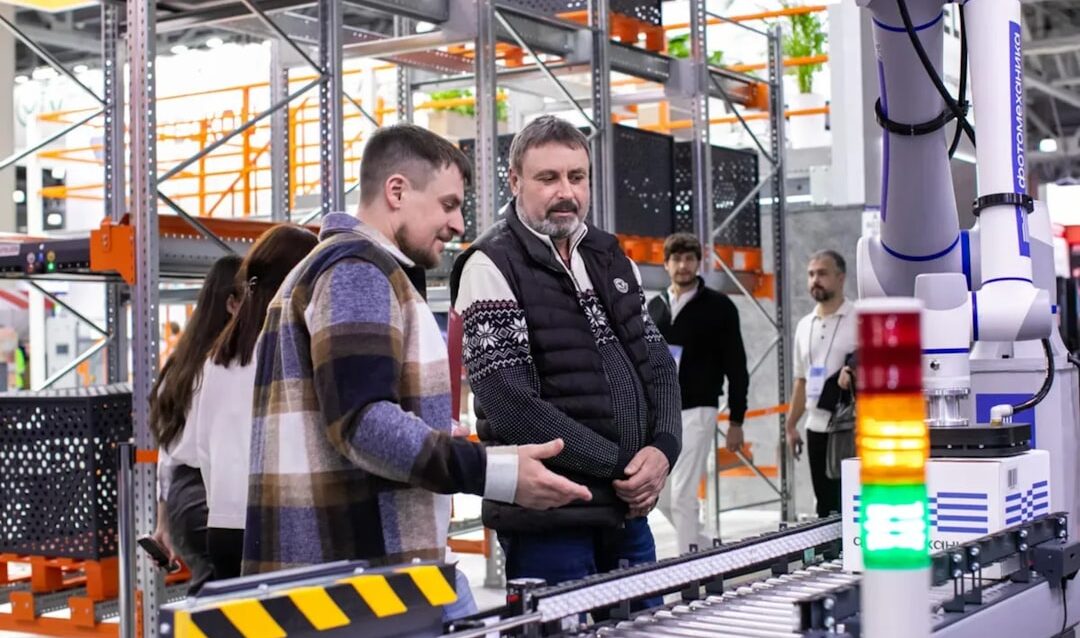
AI in logistics and warehouse operations refers to the application of artificial intelligence technologies to optimize supply chain activities, inventory management, and fulfillment processes.
This isn’t merely theoretical optimization; it represents a critical shift towards autonomous, data-driven decision-making within physical infrastructure. Businesses that ignore the integration of AI risk falling behind competitors who achieve greater operational efficiency, reduced waste, and faster delivery times. As an AI agency, we observe that leaders are moving beyond basic automation towards predictive and prescriptive AI that reshapes entire operational models.
How AI Optimizes Warehouse Workflows
AI primarily optimizes warehouse workflows by enhancing visibility, predictability, and automation across various stages. Machine learning algorithms analyze historical data to forecast demand more accurately, minimizing overstocking or stockouts. This proactive approach impacts inventory management significantly, moving it from reactive adjustments to predictive control. Systems like Oracle Warehouse Management Cloud use AI to optimize product placement, ensuring fast-moving items are easily accessible, thereby reducing picking times. Oracle’s AI-driven WMS capabilities showcase a clear example of this.
Robotics also plays a role in physical automation. Autonomous Mobile Robots (AMRs) and Automated Guided Vehicles (AGVs) navigate warehouse floors, transporting goods and assisting with tasks like put-away and retrieval. Computer vision systems, often powered by deep learning models, perform quality control inspections, identify damaged goods, and verify package contents at unprecedented speeds. These AI-driven tools reduce human error and boost throughput, directly improving operational metrics like Order Fill Rate and On-Time Shipping.
Key Applications of AI in Logistics
The scope of AI in logistics and warehouse operations extends beyond the physical warehouse, impacting transportation, last-mile delivery, and overall supply chain resilience. Here are several critical applications:
- Demand Forecasting: Predictive analytics, using models trained on sales history, seasonality, promotions, and external factors like weather, refine demand forecasts. This allows for more precise inventory planning and avoids costly expedited shipping or lost sales. Advanced neural networks can identify subtle patterns that traditional statistical methods miss.
- Route Optimization: AI algorithms assess real-time traffic conditions, delivery windows, vehicle capacities, and fuel efficiency to generate optimal delivery routes. Companies like Amazon Logistics employ sophisticated AI to manage complex delivery networks, dynamically adjusting routes in real-time to minimize transit times and fuel consumption.
- Predictive Maintenance: Sensors on machinery and vehicles feed continuous data to AI systems that predict equipment failures before they occur. Anomaly detection models identify deviations from normal operating parameters. This enables proactive maintenance, reducing unexpected downtime and extending asset lifespan for forklifts, conveyor belts, and delivery fleets, ensuring continuous operations.
- Automated Picking and Packing: Robotic arms integrated with computer vision identify, pick, and pack items with high precision. This is particularly valuable for repetitive tasks and hazardous environments, enhancing both safety for human workers and overall speed. Reinforcement learning can train these robots to adapt to new item types or warehouse layouts.
- Fraud Detection: AI monitors transactions and shipping patterns to identify anomalies that indicate potential fraud or theft, such as unusual order sizes, addresses, or delivery routes. This proactive monitoring secures the supply chain against financial losses and unauthorized activities.
- Supplier Management: AI tools evaluate supplier performance, assess geopolitical risks, and predict supply chain disruptions based on global events and historical data. This aids in building more resilient sourcing strategies and selecting reliable partners.
Real-World Impact: Efficiency and Accuracy
Businesses adopting AI in logistics and warehouse operations report tangible improvements across their operations. Walmart, for example, utilizes AI and robotics in its fulfillment centers to sort and pack orders faster, handling millions of items daily. This directly impacts customer satisfaction through quicker deliveries and reduced lead times. The gains extend to accuracy, where automated systems drastically reduce picking errors common with manual processes, leading to fewer returns and less waste.
An AI agency like ours can help you identify strategic areas for automation and apply tailored AI solutions, moving beyond off-the-shelf software to systems designed specifically for your operational nuances. This often involves integrating AI with existing Enterprise Resource Planning (ERP) and Warehouse Management Systems (WMS) like Microsoft Dynamics 365 or Infor WMS. For companies looking to systematically integrate AI into their operational backbone, our AI-Powered Process Automation service helps design and implement intelligent automation workflows that drive efficiency and accuracy from the ground up, transforming your supply chain.
Implementing AI: Challenges and Solutions
Adopting AI in logistics presents challenges, including data integration complexities, workforce readiness, and initial investment costs. Legacy systems often lack the interoperability needed for seamless AI integration, creating data silos. Data quality also proves a hurdle; AI models, particularly deep learning architectures built with frameworks like TensorFlow or PyTorch, require clean, well-structured data to deliver accurate insights.
Addressing these issues begins with a clear AI strategy. Companies must first assess their current infrastructure, identify high-impact use cases, and invest in robust data governance frameworks. Training existing staff on AI tools and data literacy is crucial, fostering a hybrid workforce where humans supervise and collaborate with AI systems. Phased implementation, starting with pilot projects, helps validate ROI and refine deployments before a broader rollout. Adopting industry standards like GS1 provides frameworks for data exchange, easing integration across the broader supply chain ecosystem.
| AI Application Area | Core AI Technology | Primary Business Benefit | Example Systems / Tools |
|---|---|---|---|
| Demand Forecasting | Machine Learning, Time Series Models, Neural Networks | Reduced stockouts, minimized overstocking, improved cash flow | SAP Integrated Business Planning, Oracle SCM Cloud, Blue Yonder Demand |
| Picking & Put-away Optimization | Computer Vision, Robotics, Reinforcement Learning | Increased throughput, reduced labor costs, fewer errors | Kuka, Locus Robotics, Amazon Robotics, Honeywell Intelligrated |
| Route & Fleet Optimization | Graph Algorithms, Deep Reinforcement Learning | Lower fuel costs, faster delivery times, reduced emissions | HERE Technologies, Descartes Systems, ORTEC, UPS Roadnet |
| Predictive Maintenance | Anomaly Detection, Sensor Data Analysis, IoT Integration | Minimized downtime, extended asset life, improved safety | IBM Maximo, PTC ThingWorx, Siemens MindSphere |
| Warehouse Layout & Slotting | Optimization Algorithms, Digital Twins, Simulation | Maximized space utilization, efficient workflow, reduced travel time | Manhattan Associates WMS, HighJump (Körber), Logiwa WMS |
Key takeaways
- AI transforms logistics and warehouse operations by enhancing prediction, automation, and efficiency.
- Core applications include demand forecasting, route optimization, robotic picking, and predictive maintenance.
- These technologies lead to significant reductions in operational costs and errors while improving delivery speed.
- Successful AI implementation requires a strategic approach to data, infrastructure, and workforce training.
- The AI Division helps businesses design and deploy custom AI solutions for complex supply chain challenges.
Frequently asked questions
What is the main benefit of AI in logistics?
The main benefit of AI in logistics is enhanced operational efficiency and accuracy across the supply chain, leading to reduced costs and faster delivery times.
How does AI improve demand forecasting for warehouses?
AI improves demand forecasting by analyzing vast historical and real-time data, including external factors, to predict future needs more accurately, minimizing stockouts and overstocking.
What types of robots are used in AI-driven warehouses?
AI-driven warehouses primarily use Autonomous Mobile Robots (AMRs) and Automated Guided Vehicles (AGVs) for transporting goods, alongside robotic arms for precision picking and packing tasks.
Can AI help with last-mile delivery?
Yes, AI helps with last-mile delivery by optimizing routes based on real-time traffic, weather, and delivery schedules, improving speed, fuel efficiency, and overall customer satisfaction.
What data is critical for AI in warehouse operations?
Critical data for AI in warehouse operations includes inventory levels, sales history, shipping manifests, sensor data from equipment, and external factors like weather, market trends, and supplier performance.
What are the primary challenges of implementing AI in logistics?
Primary challenges include integrating with legacy systems, ensuring high data quality, managing initial investment costs, and training the existing workforce to effectively use new AI tools.
Work with The AI Division
Integrating advanced AI into your logistics and warehouse operations requires specialized expertise and a deep understanding of both AI capabilities and supply chain intricacies. The AI Division designs and ships custom AI systems that address your specific operational bottlenecks. As an AI agency, we partner with businesses to transform complex workflows into streamlined, intelligent processes through our AI-Powered Process Automation services.
Ready to put this to work in your business?
Tell us what you are trying to automate and we will tell you straight whether AI is the right fit.